Showing posts with label Prosthetic_socket. Show all posts

Friday, 25 May 2018

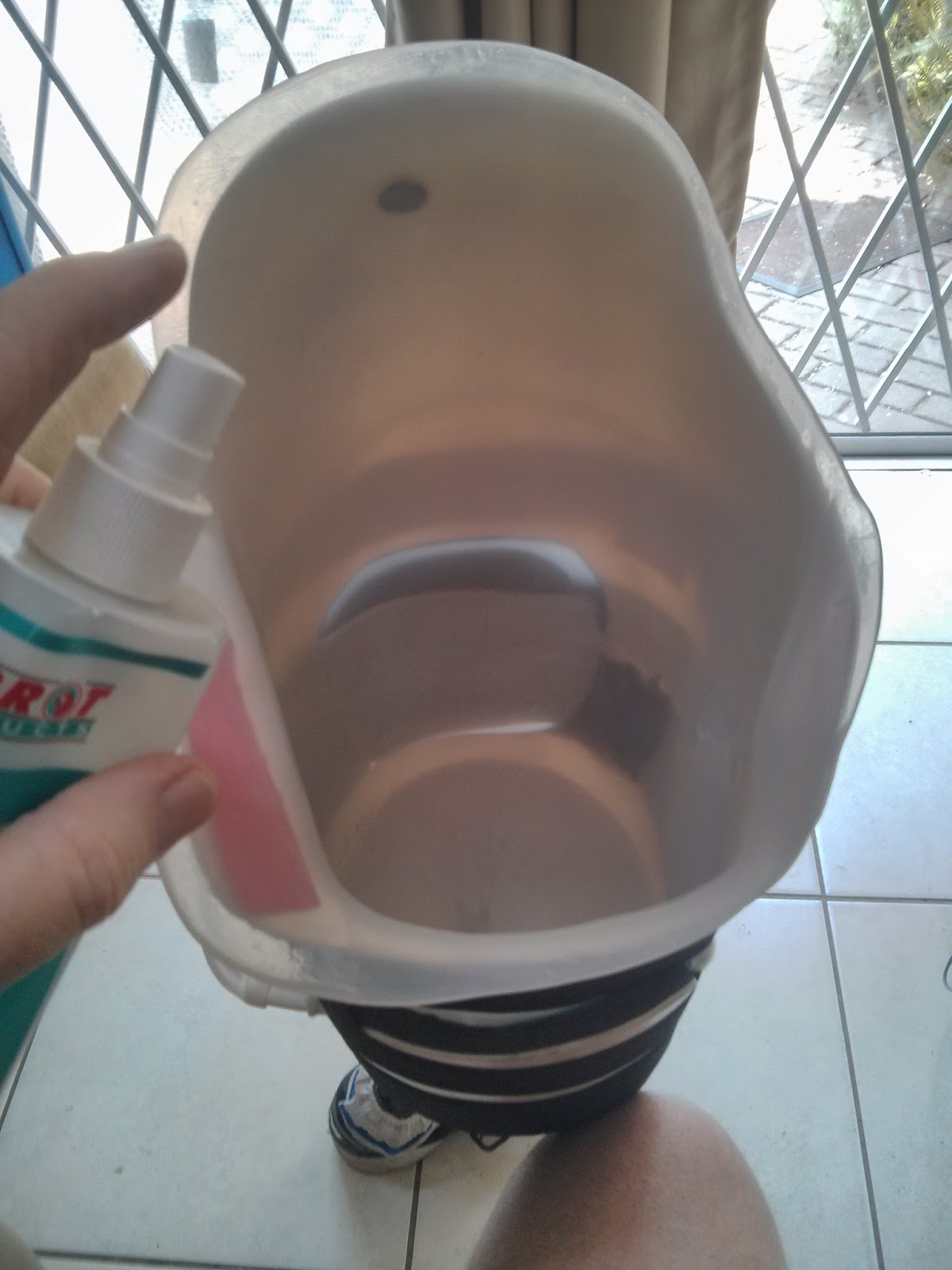
May 25 2018 - Prosthetic Accessory Test

It has been a month since my last blog. Not much has happened, but what has happened has been depressing, and exciting.
Friday 4 May 2018
My socket had been bothering me, so I visited my Prosthetist. He had a bunch of new "Toys" for me to try out for my prosthetic leg.  :-)
Toy1 - A rotation adaptor is a device that fits between the socket and the knee that allows the lower leg to rotate. While sitting, this allows the lower leg to be twisted 360 degrees. I can rotate at the knee and put the foot right in front of my face.

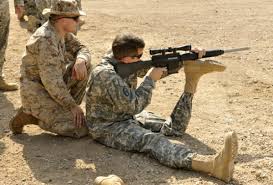
This guy is using a rotation adapter
I personally could not find any use for it, other than as a party trick.

Toy2 - A screw that replaces the normal pylon, so I can lengthen and shorted the pylon. This looks like something I could really use.

During the ParkRuns, I battle when the terrain slopes down from left to right. My left prosthetic leg is always way to long, and that makes walking very difficult. If I could shorten and lengthen the leg easily it would help me lots.

Toy3 - An ankle device made for ladies that change their heel height often. If the heel is thicker/taller, then the toe will not have pressure on it to break the knee loose as I walk. High heel shoes mean the prosthetic knee will remain stiff. This problem is also evident when walking down a hill. My weight never transfers to the toe as I go downhills, so the knee never bends.
This device changes allowable heel height (actually the angle of the foot) with the push of a button.

This is my old fixed ankle.
Heel height Variable Ankle.
You can see the big white button on the side. Pushing it releases the foot, so the angle can be changed. It only is variable for about 10 degrees, I wish it did more.

Toy4 - An extension assist. This is a spring and cable assembly added to the inside of the knee to help push the knee into the straight extended position.
It takes pliers and about 5 minutes to install. There are three different strength springs. 


---
On the ParkRun I was doing that Saturday, there is a 1 km section where shortening the left leg 1.5 cm would help, and a 1.5 km section where a 3 cm shorter leg would be nice. On the rest of the run, a normal length would be best.
The fancy screw pylon would only add or subtract about 1 cm to the length of the leg. My prosthetist suggested that maybe I could just lossen the bolt, and slide the pylon out of the ankle or out of the knee, then tighten it back up. I tried that and found I could safely lengthen and shorten the leg by a total of 3 cm. :-)
I Cut the pylon shorter, then marked the pylon with lines to indicate the different lengths I would require for the different parts of the run.

I decided to not use any of the new "Toys" on the Park Run because I had not practised with them.

----------------

Saturday after the ParkRun.... 
:-( My poor stump is in such bad shape. Blisters, and lots of pain. 
The leg shortening worked well for the first half of the race. I was at the half way point 15 minutes earlier than last time. I was feeling good.
Then my stump bottomed out. PAIN.... I stopped and took the leg off and added a thick stump sock, hoping to stop the stump from going so far into the socket. That made the socket very tight, and I could feel throbbing, which means blood can not get out of the stump. After about half a km, the stump was again bottomed in the socket. Every step hurt, and the throbbing meant I could not add more socks. 
The second half of the run was on pavement, and it took me 25 minutes longer than the first half, which is on rough terrain. 
I could feel blisters forming on the stump, then the blisters popped, and soon the sweat was getting into the popped blisters. 
I finished with a very slow time, went straight to the car and removed the leg, then headed for home. Once home I could not put the leg on because the stump was so sore. Fortunately my crutches were in the car, and I could get into the house.
A quick shower, and lots of anti-inflammatory drugs, and into bed.

I was not able to put the leg on for three days because of the swelling of the stump. I had two rows of blisters, and lots of sores on the end of the stump.

The next 10 days were short walks only. I did get to try out the "Toys". The rotation adaptor was put aside. I could not find a use for it.
The screw pylon was also set aside. The sliding of the pylon in and out of the knee and ankle, worked very well, and is quicker than screwing in and out the pylon.
The extension assist ended up having a benefit I had not considered. The spring makes the leg go straight much quicker, and it slammed straight. I was able to set the extension resistance more, and then the fast extension got smoother. The biggest benefit was that the spring locks the knee as a soon as it is straight. I no longer need to make sure the knee is straight, and locked before putting weight on it.  It automatically goes straight and locks. I like that a lot. I feel much safer.
I tried the different springs. The stiffest was very stiff, and may have been ok for a hard core sprinter. The lightest spring was ok for walking around the kitchen. I ended up using the middle firm spring.

I next put on the variable ankle. I doesn't seem to have enough travel to be of any use. I took it back off, and put on my solid ankle. Then after two days I decided to try it again. It weighs more than my solid ankle, and I can feel the extra weight. It does seem to help some when walking down hill, because I can lower the toe, and that allows the knee to break loose on downhills. But then I took it off.
Then a few days later I put it back on. Duh!!!
I went to a place that had a long wheel chair ramp. It is about 10 meters long, and is exactly a 10 degrees slope. 
I set the ankle so it is good for flat ground when the toe is at the farthest up position. Then before going down the hill, I push the button, and stomp on the heel to force the toe as far down as it will go, then push the button again to lock the ankle in that position. With the toe down like that it is very hard to walk on level ground, but I can walk normal down the slope. That is very nice, because I normally have to walk down slopes with a stiff prosthetic leg because the knee will never break loose. With this variable ankle set to max toe down I can do the wheelchair slope easily. 
The price of the variable ankle is about R12,000 ( $1000). 

Yesterday I went to get measured and fitted for a new socket. Hopefully it will not be one that allows bottoming of the stump.
The new variable ankle is almost one cm longer than my fixed ankle. I need to shorten my pylon, so it will be adjustable like I did on the ParkRun. But since I am getting the new socket in a few days, I will wait before cutting the pylon.
-----

Friday, 23 June 2017

June 22 2017 - Third PET scan

Today I went for my third PET scan.
The diet was followed perfect, and I was looking forward to a clean scan. I packed an egg sandwich to eat after the scan.
I drove to the PET scan place, arriving at 10:00 and did the whole procedure of injections, pills, and drinking peppermint tasting fluid.
I took my prosthetic leg off while there, and just used crutches.

I did the scan, then she said she wanted to re-do a section. So I ended up doing a total of 40 minutes in the tunnel.
Then they told me to go wait in the cool down room because I was too radioactive to be near anybody for an hour or so. Normally they allow me to eat then, but the lady said no food. About 20 minutes later, she said the Doctors wanted another partial scan.
So I went back into the tunnel, but this time it was only for about 10 minutes. They just did my groin area.

Then I went back to the cool down room. They said I could now eat.
After eating, I started to put my leg on, to go home. Then the Lady told me to leave the leg off for a bit longer. After another hour she came in and asked me to follow her on crutches, to the ultrasound room.

There they did an ultra sound probe of the area next to my groin on the stump. The cute ultrasound Lady said the area in question was next to, the groin lymph node.

After 10 minutes she had a pile of picture paper on the floor. She picked them all up and left. About 20 minutes later, she came back with a doctor. He did another 10 minutes of ultrasounding my thigh, and he produced another pile of paper pictures. They both left with the pile of pictures, and told me to go wait in the cool down room.

About 10 minutes later a lady told me I could put my leg back on. They they came and gave me a big sealed envelope and told I could leave now, and me to give the envelope to the Oncologist. They said that it takes 3 or 4 days before the pictures are interpreted and the report will be sent to the Oncologist.

On the way home I felt depressed, so bought a pizza.

At home I looked at the CD. All images are in DICOM (Digital Imaging and Communications in Medicine) format.
---------
June 23
It was not easy to see the DICOM images. I had to use GIMP (Graphic and Image Manipulation Program) to convert them to png format.
 Here are 2 of the PET scan pictures.


 It is easy to see what the problem is. On the groin muscle is a bright spot on the PET scan photos.
The bright dots above it are my balls, and the big ball above them is my bladder.
---
Today I also spoke with my prosthetists. He made a cast of my stump almost 5 weeks ago. I wondered why things are taking so long.
He has been going on courses to learn a new system for prosthetic attachment.
Normally, like with mine, there is a seal, and a one way valve, that allows air out of the bottom of the socket when the stump is forced into the socket. This forms a suction in the very bottom of the socket, and that keeps the prosthesis from falling off.
With this new system, the seal is very high on the stump, and a small vacuum pump keeps the whole stump under a vacuum. This is supposed to keep the volume of the stump the same, and force the sides to be in contact with the socket. This is supposed to give greater feel, and less stump shrinkage through out the day.
Until very recently this system has only been available for below the knee amputees.
The brochure says it is for people that:


  • need volume management
  • require improved socket fit and comfort
  • benefit from increased proprioception and enhanced gait symmetry
  • need added safety by eliminating/reducing pistoning 


  • Well, I have need of all of those. As usual, they want the price of my house for the vacuum system.

    One company also has a new foot/ankle system that allows walking on uneven ground.


    Again big prices. Add to that a good new knee, and the total for a new leg will be +- $155,000 or  R1,900,000

    My prosthetists say he is trying to get a loaner vacuum rig so he can practice building a system. He wants to learn on me. He also wants the medical aid to pitch in for most of the cost. I may have to also add some money.
    All this is very exciting for me........
    But now I have a shining spot on my PET scan pics. :-(
    ------


    Wednesday, 9 November 2016

    Nov 10 2016 - Visiting the Oncologist.

    Yesterday I did a blood test.
    Then, I did X-rays of the chest and abdomen.

    I fasted last night, and today I did a sonogram of the chest and abdomen.
    The sonogram lady was cute. She measured all my organs, and checked for tumors.

    Then I ate a huge breakfast, and read my book.
    Then I went to the hospice. They have a good used book store, and lots of cheap "junk". I bought a book and 2 steak knives.

    Then I went to the local library. I have not been in there for 10 years. It was so empty. They had one computer for people to use, but it was "un-serviceable".
    I sat and read about Windjammers. Big old sailing ships. Cool things. The big ones had 1.7 acres (.68 hectors) of sails.

    When leaving the Library a woman and daughter came up to me and asked if I could explain to them how the prosthetic leg works. I love talking about my leg, so I chatted till they kept saying goodbye over and over. :-)

    Then I went for my appointment with the Oncologist lady. She looked at the X-rays, blood test, and sonogram. Then said that there is absolutely no indications that I have, or ever had cancer. She said that I am in remission. That is the first time she has used that word. She then cautioned me that AngioSarcoma is a sneaky cancer, so I am best to be vigilant and a little paranoid.
    She then looked at my foot and leg. She said that it is swollen and the toenails are falling off. Duh!
    She then said that she thinks is more likely from the Toxal chemo than from diabetes or cancer. She said that AngioSarcoma likes to grow in stressed parts of the body, so I should work at keeping the inflammation down in the foot and leg, with massage or compression stockings.

    Then I went home. The rainbow socket worked great. At the oncologist my stump started hurting up near the groin, but when I inflated the air bladders, my  weight was distributed different, and I made it home with no problems. This rainbow socket is not very comfortable, but it doesn't hurt.

    With all the oncology out of the way, I can start packing seriously. This time next week I should be in the RV watching bears with my Florida buddy. :-)
    --

    The U.S. elections are over. HRC lost. I think America dodged a bullet there.
    Most people I talked to didn't vote "FOR" Trump. They voted against the high debt, against big government, against the corrupt politicians (that is called a redundancy), against slack immigration policy, and against silly wars.
    If anyone can sort out the U.S. finances, it should be Trump.
    I like that he is a corporate negotiator, and may prevent hot wars by negotiation, I just hope he doesn't create trade wars.
    Good Luck America.
    --


    Monday, 7 November 2016

    Nov 07 2016 - New Rainbow socket

    I spent a few hours at the prosthetic place today, and finally, got my new              "RAINBOW"
    socket.


    It fits tight. Good tight. Not perfect, but the best fitting socket I can remember, and this is number 11.

    It has 2 air bladders. Both on the left side, one above the other. The top one will be for when my stump shrinks, and can be used instead of putting on more socks. This means I can make a plan for a shrinking stump without taking the leg off.
    The lower bladder is for better feel. (proprioception) The socket was designed to be tight, but not over tight. It does exactly that.
    If the bladders fail now, I could still walk quite a ways without pain. My last white socket with the two bladders I had put in, was such that, I needed to inflate the bladders to be able to use it. Those bladders took about 10 pumps each. My new socket takes 1 or two pumps till it is tight. That means my stump can shrink quite a bit before the bladders will become ineffective.
    Bradley, Bi and I spent quite a bit of time adjusting the leg today. I finally told them to go stop fussing, because I couldn't find anything that they could possibly do, to make it any better. They have done a wonderful job.

    It is a very clean and pretty socket, compared with my last one.

    I still have to figure out the best way of stowing the tubes for the pump.
    You can see them sticking out in the top picture.
    --
    For my trip next week, to the States, airport security wants a letter from my doctors confirming I have had my leg amputated.
    They say that, "Absence of a leg is not considered proof."
    That statement gets lots of laughs.
    Then I got online, and found that their concern was if a terrorist is willing to blow himself up, then he would also be willing to have a leg removed, so he could fill the empty socket with explosives. I guess a terrorist would be too stupid to also fake a letter from a Doctor.

    I have a busy week. Appointments with the prosthestist, the Oncology lady, the Surgeon, blood tests, and x-rays.
    I have not even thought about if any test is bad, and I have to cancel my flight. If that does happen, then loosing the money for the tickets will probably be the least of my worries.
    --

    Thursday, 3 November 2016

    Nov 3 2016 - Power Failures and Failures of Those in Power.

    Nov 1 2016
    No electricity power here since yesterday morning. 36 hours now. Also no water. I guess they could not pump the water up into the towers.
    Lack of power also took out all cell towers after their batteries ran down. So no electricity, cell service, water, or internet.
    Most houses can't open their security gates. Dead batteries. Also all home security systems batteries are down, so many people aren't going to work, but staying home, because robberies are way up from 2 days ago.

    My house is solar powered, so of course MY gate works, :-) and MY food is cold, :-) and MY security system is up, :-)  and I have 70 liters of drinking water if I need it.
    A hot shower would be nice though. :-)
    Today's high temperature is 36C (97F). Low last night was 29C (84F) in the house. 
    I had my ceiling fan on all night, so it wasn't so bad. :-)
    I just drove 20 km to an open shop and bought lots of food, that I don't have to cook. (mostly health candy bars)
    I could run my micro wave off of the batteries, but I am trying to conserve the batteries for important things.......like refrigerator, computer games and TV. :-)

    I live in a gated security village. When the power goes off, the security firm doubles all personnel, so within our little area, there was no crime. But outside of any security areas, saw a big increase in break ins.

    It turns out the problem with the electricity was more complex than I had thought. I live in a suburb of Centurion, which has grown into, and joined Pretoria (now renamed to Tshwane).
    The municipality shut down a large sub station for planned maintenance. Centurion (Pop. 250,000)  was to be without electricity from 06:00 to 12:00. 
    During this time some cable thieves raided an off line substation in my neighbor hood, and stole some cables. They break into the substation, 

    and cut the cables,


     then hook a big truck to one end and drive away. 
    Pulling the cables from the ground. 


     (These are some pictures of a cable theft from last year.)

    When the planned maintenance was finished, Centurion came back online, but my suburb was still off. They then spent a day fixing the damaged substation for my suburb, only to find another sub station near my house was damaged as well.
    Over all, there was about 200 houses without electricity for 36 hours.

    During the first scheduled shut down other cable thieves also stole cables in another part of Centurion. This suburb has the water tower in it.

    A few years ago, they started color coding cables. They made fiber optic cables a different color so thieves wouldn't remove and steal fiber cables, only the copper ones. Then some "brilliant" idiot in government decided that since thieves never stole Green cables, they should make the new copper cables green also. Now thieves rip out all cables. Duh!

    ------
    Nov 3 2016
    Yesterday,I spent 4 hours at the prosthetic place, trying to get the new socket right. 
    Today, I spent 3 hours at the prosthetic place trying to get the new socket right.
    It seems as if the addition of the air bladders has compromised the shape of the socket to my stump, and we are unable to get a suction to hold the leg on. 
    Once again I am on the socket that I put the bladders into. I think everyone at the prosthetic place is embarrassed when I wear the leg into their place. Usually they make very nice artistic sockets.

    But by FAR the most important thing about this ratty socket is... It does not hurt!

    ---
    Later
     Nov 3 2016

    This morning the "State Capture" report was released here in South Africa.
    Did I hear you say "Huh?"
    South Africa has some very good things, that most countries lack. I am thinking specifically about the Office of Public Protector. 

    Wiki says:
    The office of the Public Protector has the power to investigate any conduct in state affairs and any level of government, should there be any allegations of maladministration. The Public Protector is the only institution that has the power to take appropriate remedial action against any impropriety or prejudice made by government.

    I think the American people would benefit greatly by a Public Protector.

    Thuli Madonsela has been Public Protector of South Africa for 7 years, and she has changed South Africa for the better. 
    I remember something she said in the past, something like, "If I can't say something as a fact, I won't say it."

    She retired today, after handing in her latest report about allegations of "State Capture".
    Wiki says:
    State capture is a type of systemic political corruption in which private interests significantly influence a state's decision-making processes to their own advantage through unobvious channels, that may not be illegal.

    The South African government often makes decisions that aren't in the best interest of South Africa, but favor a few rich people. The "Few" are usually big corporations. 
    One of the big corporations is headed by a guy named Gupta. Thuli Madonsela's reports into allegations his family had captured key politicians and civil servants to ensure government tenders went their way.
    The Treasury was a "stumbling block" to the Guptas' business ambitions and the family asked Deputy Finance Minister Mcebisi Jonas to sack its Director General, Nene. This was done, and sent the Rand currency plummeting.

    Here are some quotes by Thuli while interviewing President Zuma during the preparation of her report:

    Thuli Madonsela to President Jacob Zuma:

    “We want honest answers that are coming from your heart, not prepared answers.”

    “This is not a criminal justice process where you have the right to remain silent.”

    “I am concerned though that President, you are the President of the Republic of South Africa and you are employee number one. Normally when we are dealing with people who are responsible for the State, we deal with them and the lawyers they come in where necessary. It is you who is accountable, Sir. It is you who are employed by the State as its most important employee.”

    “What difference would it make between today and any other day in how the President recalls these issues? If we are starting with, for example, why did you remove Minister Nene, why do you need somebody to legally advise you, because that is a decision you took yourself without legal advice? You took that decision, exercising your power as an Executive.

    “ No, but it is a decision you have already taken, so you don’t need to be advised why you took it, because it is a decision … somebody advised you, you accepted their advice, you have already executed it, sir. So now you just have to tell us why did you take that decision? Now why do you need a Lawyer to be able to tell me why you removed any of those Ministers?”

    Madonsela to Zuma’s lawyer Michael Hulley:

    “No, Sir, you are here to support Mr President, but President Zuma is the one who is employed by the State of South Africa in this capacity. You are employed as his advisor, but not as his mouth. Mister President, I am requesting that we proceed with the answers you can give.”

    “No, sorry, sir, the President has a right to legal assistance, not legal representation. You have made that representation. I have now made a ruling that we are going to proceed, but we will focus on the things that the President is going to answer. I’m sorry sir, I cannot be bullied by you.”


    South Africa will miss her. A very sharp, intelligent and moral person. 
    ---

    Wednesday, 19 October 2016

    Oct 19 2016 - Putting Force Sensors inside my prosthetic socket.

    I have been building a sensor system to show the forces between my prosthetic socket and my stump.

    I am using some force resistive pads as sensors. They change resistance as the force on them changes. They can measure from 0 to about 20 kilograms of force.
    I sense the change in resistance with an Arduino computer, and then use the Arduino to vary the power to 3 LED lights.
    The LED lights are two color ones. Red and Green. I am using Green to show that things are on and working, and the red to show the pressure.

    It looks like this.


    I put the 3 force sensors that I had, and their wiring,  in-between two pieces of thin hard, clear plastic. I put the wiring for the LED's, and the LED's  in similar plastic. I then connected the two pieces of plastic so that when the plastic with the sensors is inserted into the socket, the LED's will always be in the same spot on the outside of the socket, where the sensors are on the inside of the socket.

     I tested everything.


    Then I slipped the sensors into the front of my socket. The lower sensor should be down by the end of my stump, and the top sensor at the top of my socket. The middle sensor is about where I have my inflatable air bladders.
    Then I test if it all works, by standing in front of the mirror.

    Then I inflated the air bladders.

    All my walking with the sensors never lit the bottom LED. This means there was never any pressure on the lower part of my stump.  I don't know why I need lights to tell me that. Pain usually does that job. :-)

    To be really effective, I would need about 50 sensors in the socket, and a way of recording the forces, so it could be played back and studied. Tomorrow I go to visit my prosthistist. I will show him my invention.
    He and I need to talk lots about me going away for a few months to America. I fear it will be on my old Mauch Knee. :-(  I am spoiled from wearing the Total Knee 2000.

    --


    Sunday, 9 October 2016

    Oct 9 2016 - Donning, an Air Bladder Socket

    My newest socket has air bladders in it It is great, but takes some getting used to. I designed and built the air bladder part myself.

    I went to Bradley to see if he had any air bladders that I could put between the flexible liner, and the fiber glass socket. He had some cool air bladders. They are about 2 inches by 4 inches. (5 cm by 10 cm).
    I got 2 of them. Each comes with a valve to trap the air pressure, and a pump.

    Here is what the bladders look like.
    The bladders are supposed to take 100 kg (220 pds) of force on them when full of air.
    It is not easy to see on the picture, but the one end of each bladder is double the thickness of the other end.
    I only have only one pump, but the pump attaches to the bladder with a quick fitting adapter, so I can carry the pump in my bag rather than on the leg.

    During the construction and designing, I had many failures :-)
    DON'T do it like this :-)


    If you remember earlier this year, I was complaining about it taking 10 minutes to put my leg on. It now takes much, longer, and requires more parts and accessories. But it doesn't hurt. That is vital and SSOOOO important.

    Here is my morning procedure:

    1. Take off the stump compression sock that I sleep in.


    2. Put on part of a lady's large pair of tights. I had to cut away most of them. Their purpose is to stop my pubic hairs from getting pulled by the silicone liner. I tried shaving, but the stubble was worse than the hair being pulled out.


    3. Next I smear glycerin over the end of my stump. This is to ensure that the silicone liner does not pull the skin on the stump end. Any pressure or force on the stump end is painful.


    4. Now I liberally spray a mixture of alcohol, glycerin, and distilled water into the inside out silicone liner. This makes it easier to roll the silicone liner onto the stump.

    5. Gently roll the liner onto the stump. I have to be very careful doing this. Any time I pull the liner toward my hip it hurts.

    6. Now the liner is on, and the top part is over a part of the tights. The liner has small silicone ridges around it, down the length. On my last few sockets, these would form a seal for the vacuum in the lower part of the socket. This socket with the variable volume, caused by the inflatable air bladders is unable to form a vacuum seal with these small ridges.


    7. Put on a sealing ring.


    8. Now I put on a thick wool stocking on the top part of my stump because the top part is not adjustable using the bladders. The bladders only are on the bottom part of the stump, but not near the end of the stump. I need a little more security at the top part, so I put on a thick sock. I make sure the vacuum seal will not be broken by the wool sock.


    9. Now I inspect the hoses, valves, and bladders. The bladders need to be fully deflated. I have replaced the metal hose clamps with Velcro. The Velcro strap wraps around the socket 4 times.

    10. I now tuck the hoses out of the way, and get the valves in a place where I can reach them when the socket is on the stump.


    11. Now I inspect all the pieces of foam I have inserted between the flexible liner and the socket shell. These will put pressure where I can not put the air bladders. I use 3 types of foam. They are color coded by compress-ability. White, Red, and Blue.

    12. Now I liberally spray the inside of the socket with the same spray I used to put the silicone liner on. With out lubrication, the sealing ring will not slide against the inner flexible socket liner.

    13. Now spray the sealing ring, and the whole silicone liner to make it slide easily into the socket.

    14. Put the stump into the socket.

    15. Push, shove, and bounce to get the stump down as far as possible into the socket. This is the part that scares me most. Any friction causes the silicone liner to try to move up the stump, and forces against the end of the stump. This can be very painful. It is pushing HARD, but gently. Duh!


    16.   When the stump is as far in as I can push it, it is still not in far enough. This is a bad time, because since the stump isn't far enough into the socket, the leg is way too long, and not steady or supported well. Walking is very difficult.

    17. After about 30 minutes of bouncing and walking around the kitchen, the stump is far enough into the socket.


    18.  I check by sticking my finger in the vacuum valve hole. This way I can feel exactly how far the stump is into the socket.


    19. Now to attach the pump to the bladder and pump. The bladders push securely on the sides of my thigh, and hold the femur very tight. The Proprioception increases dramatically. I can feel every movement of the foot.

    20. Now I struggle and battle, to get my shorts on. Then I wait for my Buddy to drive up and take me to lunch. :-)

    --

    One of my readers sent me the links to some interesting sites about bionics. Cool stuff.

    http://www.cybathlon.ethz.ch/en/

    https://www.youtube.com/channel/UCqGx-eUykZLDKjjrwRhfilQ/feed

    Thanks for that. :-)

    --

    Friday, 7 October 2016

    Oct 7 2016 - Hurricane and Air Bladders.

    03:30
    I can't sleep.
    No special reason.
     Not cancer, or pain, or drugs.
     Just a normal, garden variety, can't sleep.

    I don't think my mind ever completely rests. I woke up at 03:00 thinking a jumble of thoughts.
     My Florida friends and hurricane Mathew.
     Air bladders for my prosthesis socket.
     My poor solar batteries.
    Getting my car through the roadworthy test.

    All these thoughts flooding seconds apart, over and over. No one thought taking charge.

    Some of my Florida friends have boarded up their houses, and some have fled to the West, and some have done both. Away from the East coast and the hurricane's path. Usually these friends either have hurricane parties while the wind and rain blows, or else they just work as normal. Not this time. The predictions must be real bad. I have these people in my thoughts.
    The eye should pass right over one friends house. My poor neglected RV is only 16 miles from the center of the path. It will probably get damaged. :-( It is deep in a forest, so it is protected from the wind, but the roots of the trees are in sand, and often the wind blows the trees down.

    --

    I have always thought of having multiple air bladders inside the prosthesis socket, which would allow the varying of pressure at different points against the stump, as needed. But the mechanics of incorporating bladders into the socket design require much thought and design work. I have a medical boot that is mainly used for sprained ankles.
    It has air bladders inside to control pressure at different parts of the foot to prevent the foot from moving around. I just opened mine up and removed two bladders. Now to put them somehow into my socket. I think between the soft socket liner, and the hard shell of the socket. Then when they are inflated, they will press the liner against my stump. Ideally there would be many many bladders, each individually controlled. I question the strength of the bladders.
    A perfect fitting socket is every amputee's dream.

    --

    Last night while I was watching TV, using headphones, we had a power failure. My solar system batteries kicked in, and the inverter supplied power to my house just like it was supposed to, but I didn't hear the alarm. After 4 hours of using the lights, TV,  2 computers, and cooking supper, I only then realized the power had failed. I normally reduce the electricity usage as soon as the power fails. This time I didn't know. So when I headed for bed at 23:30 I noticed my poor batteries were way below the minimum I normally allow them. Discharging batteries to far hurts them. :-( Sorry batteries.
    Right then, before I could reduce the usage, the mains power came back on, and started recharging the batteries. They have been on high charge for about 4 hours now.
    I need to devise a fail safe alarm, not just a soft buzzer to warn of power failure.

    --

    I got the car brakes fixed. The one slave cylinder had leaked real bad. Now I need to take it through roadworthy before I can put it into my name from Maddie's name. The papers Maddie sent arrived yesterday. 14 days to get here from George.
    At the brake repair place, I saw a notice for a company that waits in line for people at the motor vehicle department offices.
    We-Q-4-U.
     In British colonies, the word "Que" means to stand in a line. These people take all my papers, and stand in line for hours in my place. It is a good employment of poor, uneducated, people. They mainly do vehicle registrations, and renewals.
    They are offering a new service, where they take your car through the roadworthy inspection, then take it to mechanic to fix any defects, then back to roadworthy, and keep doing this until the car passes.
    My car has non standard tires. South Africa law requires the tires to be manufacture recommended tires. My car has Mag wheels with bigger tires.
    WE-Q-4-U says they will temporarily swap tires just to pass the test, then swap the tires back. This alone will save me R3000, that I was going to have to pay for new tires.
    Then they take all the papers and complete the registration into my name.
    We-Q-4-U charge a lot of money, but it will save me many hours of standing in lines, and dealing with people that I would rather do harm to, than smile at.
    --
    My hot milk drink is finished, and I am sleepy now.
    I am hoping the humbling, hurricane doesn't hurt my friends.
    --

    Friday, 30 September 2016

    Sep 30 2016 - Another new socket...No.10

    I have been wearing my latest socket quite a bit. It is very uncomfortable, but...
    IT DOES NOT CAUSE PAIN!!!!

    It is hard to explain the importance of that to me.

    The end of my stump that is farthest from the body center, is called the "distal" end. Actually, distal is the farthest of anything from the center of the body. Proximal is the end closest to the center of the body.
    This is Doctor talk, but does help is being precise about body directions.

    The problems of my stump are mostly at the distal end. Pressure on the distal end is very painful. If the skin on the stump is pulled toward the hip (Proximaly), it puts pressure on the distal end. So when donning (that is medical talk for "putting on")  a socket, the friction force on the skin, toward the proximal end of the stump, causes skin to pull and puts pressure on the distal end. Of course this is also a factor when my entire body weight is on the stump inside the socket.

    This latest socket is kind of weird. My stump is about 35 cm long (14 in). This socket is build so that the most distal half of my stump is not in contact with the socket. The distal end just floats around like a clanger in a bell. This means that 100% of by body weight is supported on just 15 cm (6 in) of the proximal end of the stump. By putting all the weight up high on my thigh fat, it makes the pain on the distal end zero. Having all the weight concentrated is a small area is not comfortable. Like wearing shoes that are way to small.

    The big problem with having the distal end floating, is proprioception.
    Wiki says:
    proprioception pro·pri·o·cep·tion (prō'prē-ō-sěp'shən) 
    n. 
    The unconscious perception of movement and spatial orientation arising from stimuli within the body itself.


    Proprioception is deteriorated with drugs and alcohol. That is why traffic cops have you close your eyes and try to touch your nose with your fingers. 
    By having the stump distal end floating, I loose track of, and have no feedback of, where the prosthetic leg is. I must walk slow, and watch where the leg is to know if it is in front and ready to have weight put on it.

    I spent 4 hours at the prosthetic place today. We were determined to improve proprioception, comfort, and control. 
    This socket needs me to wear a silicone liner against the stump skin. The socket is made of fiberglass and carbon fiber. Inside the socket is a thick plastic liner. It has the feeling of a small tire. It is flexible, but tough.

    Here is me bending the inside liner of the socket with my thumb.

    The inside liner is riveted to the fiberglass shell. The vacuum is formed between the flexible socket liner, and the silicone liner on my stump. That is what keeps the prosthetic leg from falling off when I take a step. So there is the stump, silicone liner, flexible liner, then fiberglass shell.

    What we have been doing the last few days was putting pieces of thin foam between the flexible liner and the fiberglass shell. These foam pieces are used to push against the stump closer to the distal end, to increase proprioception. This works, BUT, the pieces of foam also increase the force needed to push the stump into the socket. The more foam, the more proprioception, but more pain. :-(

    Today we cut big holes in the fiberglass shell, and put thick foam on the pieces cut out.
    At first we had a ratchet assembly that pulled a stainless steel cable. This broke before we could get enough force.
    Then we used my big hose clamps to pull the cut out pieces in tight once the stump is inside the socket. So the stump fits in the socket easy, THEN we add the force near the distal end to aid in proprioception and control. These movable pads put force on the femur, without putting force on the distal end.

    When tight, there is a LOT of force on the stump sides. This steadies the femur and really gives me good control and it makes the whole prosthetic feel so much more like a part of my body.

    The next thing we need to work on is the force required. When I release the clamps, I feel the blood rush into the stump.

    But there is NO pain. I can go shopping and get in and out of the car easily.I wore the leg about 6 hours today.
    --

    I passed the learners test part of getting a South African drivers licence. Next is to get the car registered into my name from Maddie's name. She mailed me all the required documents express, registered mail, about 10 days ago. The post office advised me today that I can go collect the documents at the post office. 10 days for express mail to go 1300 km (600 miles).

    To get the car in my name needs a roadworthy inspection. The tires won't pass because they are non standard. New tires are R3000. The one brake is leaking, and that is R1000. This money is coming out of the money set aside for plane tickets to go to America. Between this and the driving lessons, I have used half the ticket money. I am now way short of money. But being short of money, is nominal now days.

    I decided I'll take the drivers licence road test, in my car. It is much easier to get in and out of than the driving schools cars. I have also removed the rest place for the left foot, to give my prosthetic leg more room. But first I need the car in my name.
    --

    Today at the pharmacy I chatted about an hour with a guy that works there. He is a right leg, above the knee amputee. It is so nice to hear someone complain exactly about the things, that I complain about. :-)

    He has been using one of the very first bionic knees for about 10 years. An OttoBock C-Leg. He got a loaner unit for 2 weeks of an Ossur Rheo-3 knee with a bionic foot.
    He said after a few days he was walking up and down stairs, and up and down steep slopes without a thought. He said for 20 years he has had to concentrate on walking, but with the Rheo bionic foot/knee combination he occasionally, actually forgot about the prosthetic leg.
    He has had many falls in his 20 years of amputation. He has been hospitalized 3 times from falls. Usually when accidentally stepping backwards, and putting weight on the toe that breaks the leg loose, and it suddenly collapses. His wife has been with him all three times.
    While wearing the loaner Rheo knee/foot combination they went to a party, and were standing talking to a guy, that was opening a beer. The beer squirted foam all over. He and his wife both jumped back. Then she screamed and reached for him, knowing he would fall. But the computer cut in and locked the knee, and he didn't even stumble. She looked at him and said "We are buying that leg."
    That leg costs R850,000 ( $70,000). They are selling one of their rental houses to buy the leg. He is very excited.
    He had to give the Rheo back after 2 weeks. He says his old bionic leg feels like an dangerous antique.
    --

    Wednesday, 21 September 2016

    Sep 21 2016 - Socket 101

    I am having to learn more and more about prosthetic socket design.

    Socket design deals with the interface between carbon fiber/titanium, and the soft squishy parts. It is nowhere near as interesting to me as the bio-mechanical or electronic knees.

    While socket design and building, is the less "sexy" part of prosthetic wear, it has the distinction of being the most important.
    A comfortable, pain free socket will be worn all day.
    An uncomfortable or painful socket will get little use.
    I would more likely wear a good socket with a broomstick on the bottom, than I would wear a million Rand bionic leg that fit poorly.

    A well designed bionic knee may be used by thousands of people, but because every stump is different, every socket must also be different. A prosthetic knee is science and technology. Designing and building a good prosthetic socket, is art.

    For trans femur amputations, the shorter the femur, the less stump to attach a socket to. Every inch shorter the femur is cut, means almost 10% more energy required to walk on a prosthesis. That is one reason the Paralympics classification system can not ever work. Every stump is a different length.
    All the top T-42 athletes (Amputation above the knee) are knee dis-articulation amputees. In a knee dis-articulation, the leg is amputated between the femur, and the shin bones. No thigh muscles are cut, and the femur remains intact. This also allows the full body weight to be applied to the end of the femur.
    Before my amputation surgery, the Doctor and I discussed whether it would be necessary to cut my femur. It turned out I had a suspicious growth just above and behind the knee. It was decided to cut the whole suspicious section away, and that include about 1.5 inches of femur. This left me with a shortened femur, but a relative long, shortened femur. That extra length means more leverage in stump movement, and more area to attach a socket on to.

     There are basically three different socket design theories. Most sockets are a combination of all three designs:

    1. Plug socket. This is what the peg leg pirates wore. Basically a cup that the stump fits into. Most of the body weight is supported not on the end of the stump, but on the fat around the top of the thigh. My last adjustable, socket with all the holes was like this. Usually plug sockets are held on to the stump with belts and straps.

    2. Ischial containment socket. When you sit for a long time on a hard surface, (like stadium bleachers) discomfort comes from the pelvis bone pushing on the skin and muscles against the bench. This part of the pelvis that you sit on, is called the Ischial bone. An Ischial containment socket makes a small cup like platform on the top of the socket, that cups the Ischial bone. So while standing or walking, the body weight is on the Ischial bone, and not on the stump. These sockets are held on with suction between the end of the stump, and the socket. My old Texas flag socket was like this. It tried to keep all the weight off the stump, and put it onto the Ischial bone. As you can imagine, walking with the Ischial bone cupped, is not pleasant. Another uncomfortable thing with Ischial sockets is sitting down, because of the Ischial lip pushing into the thigh.

    3. Quadrilateral socket.  This type of socket is sort of a square shape instead of being shaped like an oval. It tries to control and contain the movement of the femur within the stump. It puts much of the body weight on the skin and muscles of the stump. By me adding lots of thick foam pads in my last adjustable socket, I was turning a plug socket into a quadrilateral socket. These sockets are held on with suction, or vacuum.

    Here is a picture comparing the Ischial socket, with the quadrilateral socket. Both are for a left stump, and the front of the stump is to the right of the picture.
    You can see where I circled  the "seat" for the Ischial bone. Also see how the Quadrilateral squeezes the thigh to hold the femur from moving around.

    Most modern sockets are a combination of all three types of socket designs.

    Yesterday I spent a few hours at the prosthesis place. We looked at and talked about all my foam insertions in the socket that I wore over the weekend. I wore the prosthetic leg about 6 hours on Saturday, and 12 hours on Sunday. Being able to adjust the tightness was welcome when wearing it for long periods of time.
    I felt more like I was wearing a crutch that fit on my stump, more than a walking prosthesis. The farthest I walked was to the mailbox, about 10 Meters. It caused no pain, but was very uncomfortable. If it was my permanent prosthesis, it would live in the closet, not on my stump.

    Yesterday Bradley took another cast impression of my stump. He wants to build a quadrilateral-ish style socket. One that tightly controls my femur. Holding it in place and immobile. My femur tends to move in an outward, (Doctors call this Abduction) sideways direction when I put weight on the stump. The movement, while not painful will result in pain after a few hundred steps.

    The previous sockets that I was able to do the 5km runs in, also strongly controlled the femur, but as my stump shrunk in length, the femur was forced into the stump end, and this soon made that type of socket painful, and hurt me inside the stump end. This put me in a wheelchair for a few months.

    Then we tried the Ischial containment, which helped to reduce the pain from the socket on the stump end, but was very uncomfortable.

    Today I go to Bradley again to try a new socket. This one will be more of a quadrilateral design. It will tightly control the femur, and at the same time not allow the femur to press against the stump end, by supporting my weight with use of a small Ischial cup, and the fat around the top of my thigh.
    I guess you could say, that this socket I'll try today is 10% Ischial, 30% Plug, and 60% Quadrilateral. It will be held on with suction.
    I will have to wear a different silicone liner. This one has a soft ridge around it to seal in the suction. This liner is thinner and larger than my other one. Much easier to put on. :-)

    This may look a tad phallic, if your weird. :-)

    Many people confuse "suction" with "vacuum".
    Suction is caused by trying to remove something, from within something, without any way for air to get inside to replace what is being removed. Vacuum is when you actively remove the air from a container.
    My sockets so far have been suction. As I push the stump down into the socket, the air is squished out. The design of the liner prevents any air from getting back into the socket, so a suction is formed between the end of the stump and the socket. There is a small valve at the bottom of the socket for the release of suction and allows air back into the socket. Otherwise I could never get the socket off.
    Some very expensive, modern sockets are held on with vacuum, not suction. There is a small air pump that sucks air out of the socket. This "elevated vacuum" makes the entire stump swell to the exact shape of the socket. It gives a very firm and perfect fit between the stump and the socket.
    There is so much R&D needed for medical equipment, and so few actual sales, that prices for all prosthetic hardware is very high. For me to buy an elevated vacuum system, I would first need to sell my house.
    --


    18:00
    I am just back from Bradley's. My new socket feels great so far.

    You can see the lip for the Ischial bone. It is about a 30% Ischial, 30% Plug, and 40% Quadrilateral.
    The Ischial seat is great for standing, but rubs a bit while walking. My stump goes quite far down into the socket, but the Ischial lip stops any further going in.
    I'll try it for a few weeks, then go back for a fitting. I am sure that wearing it lots will force the stump to shrink even more.

    For the first time in many months, I am thinking about going to the USA I think if I had a good prosthesis that could be worn all the time, then getting around inside the RV would not be to hard. Showering would be just about impossible. I will need to do a sponge bath.
    I can't wait for tomorrow when I can play with the new socket a bit.
    I am excited.....
    --

    Thursday, 15 September 2016

    Sept 15 2016 - New socket, Driving, Paralympics.

    I spent yesterday at the prosthesis place. They built a new socket. It is a very complicated socket. Slit right down the front, and held closed tight with velcro. The velcro wasn't strong enough, so I added a big hose clamp also.

     The new socket is not as light as you would think with all the holes in it. The remaining part is thick and strong. It is made to be worn with a thick plastic fexible inner liner. Eventually the liner should be permanently attached to the socket.
    One major problem we have now is that my skin sticks to the liner. Which is good to keep it on tight, but bad for putting it on. My stump pain is bad when pushing the stump down into anything. So if the liner and the socket are attached, then I would have to push very hard to slide the skin against the liner. That is what we are trying to avoid. Lubrication is a bad idea because then the stump would also slide out of the liner easily.
    My previous liner was a flexible silicone sleeve that sort of lived on the stump, and was used to form a vacuum between the liner and the socket. As you can see, it would be hard to form a vacuum with all the holes in the new socket, so the vacuum is between my skin and the plastic liner, then the liner somehow attaches tightly to the socket.
    This afternoon, I went for a short shopping walk in the local shop. I needed food. The whole apparatus was very uncomfortable. There was no pain, but the intense desire to remove the leg right there in the store was hard to resist. With no way to securely attach the liner to the socket, the liner was sometimes loose. In the store, reaching for garbage bags, the socket and leg fell off. The liner was still on tight, so I was able to put the socket back on. But it never got on tight enough again to walk on. It was like I had a crutch on my hip. I sort of shuffled the rest of the way through the store to the car. I didn't get some of the stuff I needed.

    Tonight I am cutting pieces of foam to fit inside the socket to make it more comfortable


    Bradley gave me many types, and thicknesses of foam.
    The next big thing is to get the socket and liner to stay together. Some sort of clamp or snap, or something.
    I don't see anyway to "not", put the liner on before inserting it into the socket.
    My stump didn't pain me today, but right now it is not feeling very pleasant. It is funny to me to be so uncomfortable, without real pain. I fear it takes strain in ways, I hadn't thought about.
     But with all the problems, I was able to do my shopping on my own. A big step for me.

    After a few days of playing with the foam to make the socket more comfortable, I think they will build a new socket similar to this one, but with extra thick carbon fiber where I now have the pads.
    --

    The driving school collected me this morning at 04:45.
    We went to the Traffic department test center. I was 12th in line. Before they opened at 08:00 there must have been 5 hundred people in the line.
    I did my eye test, and then paid lots of money, and got a date to take the learners exam. 28 Sept at 10:00.
     I have 13 days to study. If I pass the learners exam, then the next day I will go and book a date for the driving test.
    I talked to some of the guys there. One was going to take his driving test today...for the third time. He booked 3 weeks before. After his flunks, he had to re-book. Once was a wait of 5 weeks between tests. He first booked his learners test in mid June. 3 Months and 6 full days of testing. What a waste of human time.

    --
    I have been watching the Paralympics. One of the largest Prosthetic makers "Otto Bock" does charitable emergency repairs of prosthetics at the Paralympics. So far this year:

    Repairs by equipment
    Wheelchairs: 2245
    Prosthetics: 348
    Orthotics: 134
    Repairs by Sport
    Athletics: 385
    Wheelchair Basketball: 258
    Wheelchair Tennis: 163
    Powerlifting: 140
    Swimming: 122
    Total Games repairs so far: 2727

    They talked about how the Paralympics is becoming all about technology, science, and electronics.

    If a prosthesis becomes an essential part of who you are, then it would be part of what makes you, you. Biology alone will no longer define a human being.

    Nerves transmit muscle signals at 119 meters per second.
    Nerves transmit pain signals at a very slow .6 meters per second.
    Nerves transmit touch signals at 76 meters per second.
    What if you had a brain interface that detected a thought for a muscle movement, changed that signal into an electric signal, and sent that signal to a muscle via wires at almost the speed of light. You could have reflexes that are thousands of times faster than a normal human. Tennis anyone?

    What if you had a system (like a SCUBA system re-breather) that could inject oxygenated blood cells directly into your blood stream. You could hold your breath for hours.

    What if your artificial heart had a boost function to speed up the flow of blood throughout the body.

    What if you had a helmet that could measure brain functions, and could generate these function. An athlete could then use this to stop pain signals. Professional football players would love that.

    A fancy prosthetic electronic knee could evolve into a leg system...into a lower body system, into a complete body system. So a completely paralyzed person could be an athlete...or a super athlete.

     Now blind people "drive" to the shops in driver-less cars. Putting the same electronics on the head, could allow a blind person to walk to the store unaided.

    Soon a blind, paralyzed person will be able to kick ass in ping pong.
    Pure biological people will be severely disadvantaged in the near future.

    --